
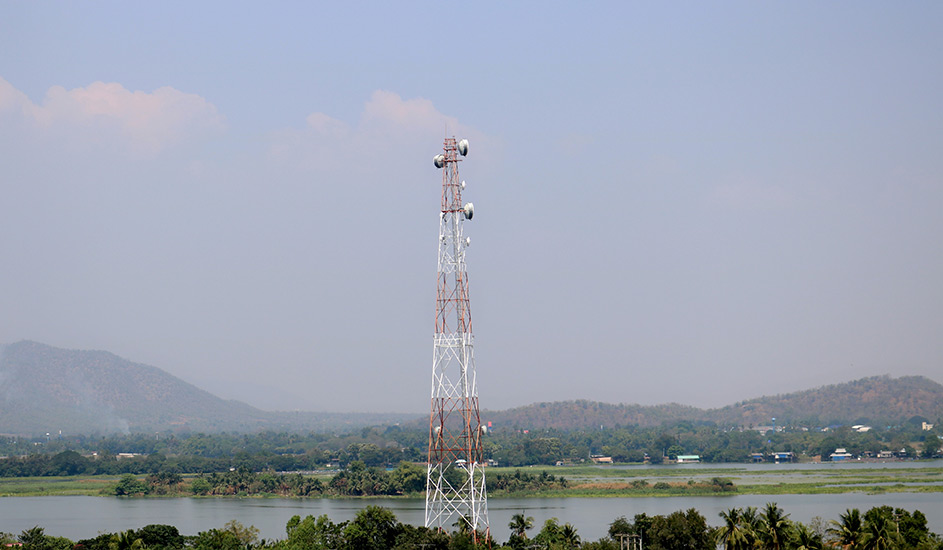
India hosts one of the world’s largest telecommunications networks, with over 1.17 billion telecom subscribers, more than 800 million broadband users, and an estimated 770,000 telecom towers supporting digital connectivity across urban and rural regions. As digital services become increasingly integrated into everyday life, the exposure of this vast infrastructure network to climate hazards is also growing.
The country’s digital transformation has been one of the defining development stories of the past decade. Today, more than a billion mobile connections, widespread internet penetration, rapid growth in digital payments, cloud services, e-commerce, telemedicine, and e-governance have fundamentally altered how citizens, businesses, and governments interact. Telecommunications infrastructure has become the invisible backbone supporting this digital ecosystem.
From a farmer accessing weather forecasts through a mobile application to a small business owner receiving payments through UPI, and from emergency responders coordinating disaster relief operations to hospitals relying on digital communication systems, nearly every aspect of modern life depends on uninterrupted connectivity. Telecom networks are no longer merely communication systems; they are critical infrastructure that underpins economic activity, public services, and national security.
However, while significant attention has been paid to expanding network coverage, increasing data speeds, and deploying next-generation technologies such as 5G, comparatively little focus has been directed towards a growing and potentially disruptive challenge: climate change.
Extreme weather events are increasing in frequency, intensity, and unpredictability across the world. India is particularly vulnerable to these changes due to its vast geography, diverse climatic conditions, extensive coastline, and large population exposed to natural hazards. Floods, cyclones, heatwaves, droughts, landslides, and intense rainfall events are increasingly affecting critical infrastructure systems. Telecommunications networks are among the sectors facing significant but often underappreciated risks.
As India pursues its ambition of becoming a trillion-dollar digital economy, the resilience of telecom infrastructure may prove just as important as its coverage and technological sophistication.
The Growing Climate Challenge
Climate change is no longer a distant environmental concern. It has become an economic, social, and infrastructure challenge with direct implications for development.
Recent years have witnessed unprecedented weather events across India. Cyclones such as Amphan, Tauktae, Yaas, Biparjoy, and Michaung caused extensive damage to infrastructure and disrupted essential services. Urban flooding in cities including Chennai, Bengaluru, Mumbai, and Hyderabad repeatedly demonstrated the vulnerability of critical infrastructure networks. Severe heatwaves across northern and central India have pushed temperatures beyond historical norms, while landslides in the Himalayan region have increasingly affected transportation and communication corridors. These events reveal a critical reality: digital infrastructure is not immune to climate risks.
According to the World Meteorological Organization, weather, climate, and water-related disasters increased nearly fivefold globally between 1970 and 2021. India has witnessed a significant rise in extreme weather events, including floods, cyclones, heatwaves, and intense rainfall episodes, many of which have directly affected critical infrastructure systems.
Telecommunications infrastructure is highly interconnected and geographically dispersed. Mobile towers, fibre-optic cables, switching centres, data centres, satellite systems, and power infrastructure form a complex ecosystem that depends on physical assets functioning reliably under varying environmental conditions.
A study by the Coalition for Disaster Resilient Infrastructure assessing India’s telecom sector found that approximately 770,000 telecom towers are exposed to a range of climate and disaster hazards, including floods, cyclones, earthquakes, lightning, heat stress, and landslides. The analysis covered five states—Assam, Gujarat, Odisha, Tamil Nadu, and Uttarakhand—and highlighted significant variations in resilience across regions and hazard profiles.
When climate hazards disrupt one component of this system, the effects can rapidly cascade through broader communication networks, impacting millions of users and multiple economic sectors.
Understanding Telecom Infrastructure Exposure
India’s telecom ecosystem comprises several layers of infrastructure.
The most visible component is the extensive network of mobile towers spread across urban centres, rural areas, mountains, coastal regions, and islands. These towers rely on power supply systems, battery backups, transmission equipment, and fibre connectivity.
Beneath the surface lies an extensive network of fibre-optic cables that carry enormous volumes of data across the country. Network operation centres monitor and manage traffic flows, while data centres process, store, and distribute digital information. Supporting these systems are power infrastructure assets, cooling systems, backup generators, and communication links.
Each of these components faces distinct climate-related vulnerabilities.
A flooded telecom shelter may disable critical equipment. A cyclone can topple towers or sever fibre connections. Excessive heat can reduce equipment performance and increase cooling requirements. Landslides can damage underground cables and isolate remote communities.
When Cyclone Amphan struck eastern India in 2020, more than 20,000 telecom towers were reportedly affected across West Bengal and Odisha, disrupting communications for millions of people. Similar disruptions have been observed during Cyclones Fani, Yaas, Tauktae, Biparjoy, and Michaung, demonstrating the growing vulnerability of coastal telecom infrastructure.
The challenge is compounded by the fact that telecom infrastructure often operates in difficult environments where climate risks are already increasing.
Heatwaves: The Invisible Infrastructure Stressor
Among the most underestimated climate threats facing telecom infrastructure is extreme heat.
Heatwaves are becoming longer, more intense, and more frequent across India. While the immediate impacts on human health receive considerable attention, the consequences for telecommunications infrastructure often remain overlooked.
Telecom equipment is designed to operate within specific temperature ranges. As ambient temperatures rise, network components experience greater thermal stress. Electronic equipment can become less efficient, resulting in degraded performance, increased failure rates, and shortened asset lifespans.
Data centres face particularly significant challenges. These facilities require precise environmental conditions to maintain server reliability and operational continuity. Rising temperatures increase energy consumption for cooling systems, leading to higher operational costs and greater strain on power infrastructure.
Data centres already account for approximately 1–1.5% of global electricity demand, with cooling representing nearly 30–40% of operational energy consumption. As temperatures rise across India, telecom operators and data centre providers may face escalating energy costs and higher risks of service interruptions unless facilities are designed for hotter climate conditions.
Mobile towers and outdoor telecom equipment are similarly affected. Elevated temperatures can reduce battery performance, compromise power systems, and increase maintenance requirements.
As India’s digital economy expands and data consumption continues to grow, the combination of rising temperatures and increasing energy demand could create substantial operational and financial pressures for telecom operators.
Flooding and Extreme Rainfall: A Growing Threat
Flooding represents one of the most significant climate-related risks to telecom infrastructure in India.
Many telecom facilities are located in urban environments where drainage systems are often inadequate to handle extreme rainfall events. Increasingly intense downpours can overwhelm urban infrastructure, leading to widespread flooding that damages network assets.
Water intrusion can destroy sensitive electronic equipment housed within telecom shelters and switching facilities. Underground fibre networks may become inaccessible for repair and maintenance. Power systems can fail, leaving towers dependent on limited backup capacity.
Urban floods frequently disrupt transportation networks, delaying restoration efforts and preventing technicians from reaching affected sites.
The consequences extend beyond telecommunications alone. When communication networks fail during flood emergencies, emergency response operations become more difficult, public warnings may not reach vulnerable populations, and coordination among relief agencies can be severely affected.
The growing frequency of extreme rainfall events suggests that flood-related disruptions may become increasingly common unless infrastructure resilience measures are strengthened.
Cyclones and Coastal Vulnerability
India’s extensive coastline exposes significant portions of telecom infrastructure to cyclonic hazards.
Cyclones bring a combination of destructive forces, including extreme winds, storm surges, coastal flooding, and heavy rainfall. Telecommunications infrastructure often experiences damage from multiple hazards simultaneously.
High winds can damage towers, antennas, transmission equipment, and power infrastructure. Storm surges can inundate coastal facilities with seawater, causing corrosion and equipment failure. Flooding may isolate infrastructure sites and complicate recovery operations.
The challenge is particularly significant because many of India’s economic hubs and population centres are located in coastal regions. Major ports, industrial clusters, and urban centres depend heavily on uninterrupted digital connectivity.
Climate projections indicate that cyclones may become more intense in certain regions, increasing the potential for severe infrastructure disruptions. Rising sea levels may further amplify storm surge impacts, exposing coastal telecom assets to additional risk.
Building resilience in these areas requires not only stronger physical infrastructure but also strategic planning that considers future climate conditions rather than historical weather patterns alone.
Landslides and Mountain Regions
Telecommunications infrastructure in mountainous regions faces a unique set of climate-related challenges.
The Himalayan region is experiencing changing precipitation patterns, glacier retreat, and increasing risks of landslides and flash floods. These hazards can damage fibre networks, isolate communication towers, and disrupt access routes required for maintenance and repairs.
Remote communities often rely on limited communication infrastructure, meaning that a single damaged tower or fibre link can leave large populations disconnected.
Connectivity in these regions is particularly important during disasters, when communication networks become essential for rescue operations, public information dissemination, and coordination among emergency responders.
As climate-related hazards intensify, ensuring resilient connectivity in mountainous regions will require targeted investments in redundant systems and climate-informed infrastructure planning.
The importance of resilient telecom infrastructure becomes most evident during emergencies. Following the 2023 Sikkim Glacial Lake Outburst Flood, communication outages complicated rescue and relief efforts in several affected areas. Similar experiences have been reported globally, where damaged communications infrastructure delayed emergency response and public warning dissemination.
The Cascading Impact Across Sectors
The risks associated with telecom disruptions extend far beyond the telecommunications sector itself.
Modern societies are increasingly dependent on digital connectivity. When telecom networks fail, multiple sectors experience simultaneous disruptions.
Healthcare facilities rely on telecommunications for patient records, telemedicine services, emergency communications, and coordination between medical facilities. Network failures can delay critical healthcare delivery.
Financial systems depend heavily on digital transactions. Mobile banking, digital payments, ATMs, online banking platforms, and financial exchanges all require reliable telecommunications infrastructure.
Transportation systems increasingly rely on digital communication networks for traffic management, logistics coordination, navigation services, and operational monitoring.
Energy utilities use communication networks to monitor grid performance, manage distributed energy resources, and coordinate restoration efforts during outages.
Emergency response agencies depend on telecommunications for situational awareness, public warnings, resource deployment, and inter-agency coordination.
Consequently, climate-related telecom disruptions can trigger cascading failures across interconnected infrastructure systems, magnifying economic and social impacts.
Economic Implications for India’s Digital Future
India’s digital economy is expected to contribute significantly to national economic growth over the coming decades.
Digital services, e-commerce, fintech, cloud computing, artificial intelligence applications, and emerging technology sectors all depend on reliable communications infrastructure. As economic activity becomes increasingly digital, the costs associated with network disruptions are likely to rise substantially.
Service outages can result in lost productivity, interrupted business operations, reduced consumer confidence, and direct financial losses. Repeated disruptions may also discourage investment in regions perceived as vulnerable to infrastructure failures.
Climate-related damages can impose additional costs through repairs, asset replacement, insurance claims, and operational disruptions.
The economic rationale for investing in resilience is therefore becoming increasingly compelling. Preventive investments often cost significantly less than post-disaster recovery and reconstruction efforts. Resilience should not be viewed merely as a defensive measure but as an investment in economic stability and long-term competitiveness.
Moving from Recovery to Resilience
Historically, infrastructure management has often focused on responding to disruptions after they occur. However, climate change demands a more proactive approach.
Building resilient telecom networks begins with understanding risks.
Comprehensive climate risk assessments can help operators identify vulnerabilities across infrastructure assets and geographic regions. These assessments should consider both current hazards and future climate scenarios.
Infrastructure standards may need updating to reflect changing environmental conditions. Towers, shelters, and network facilities should be designed to withstand more extreme weather events.
Redundancy is another critical principle. Alternative communication routes, backup power systems, and diversified network pathways can reduce the likelihood of complete service disruptions.
Power resilience deserves particular attention. Extended grid outages frequently accompany extreme weather events. Solar-powered systems, advanced battery technologies, and diversified backup solutions can enhance operational continuity.
The Role of Technology in Climate Resilience
Ironically, technology itself can become a powerful tool for strengthening telecom resilience.
Artificial intelligence and advanced analytics can support predictive maintenance by identifying potential equipment failures before they occur. Digital monitoring systems can provide real-time visibility into network performance and environmental conditions.
Remote sensing technologies, geographic information systems, and climate modelling tools can improve risk assessment and infrastructure planning.
Digital twins—virtual representations of physical infrastructure systems—offer opportunities to simulate climate impacts and evaluate resilience measures before implementation.
Early warning systems can help operators prepare for extreme weather events, enabling preventive actions that reduce damage and accelerate recovery. As climate risks evolve, data-driven approaches will become increasingly important for managing infrastructure resilience effectively.
Policy and Regulatory Considerations
Building resilient telecom networks cannot be achieved by operators alone.
Governments, regulators, infrastructure providers, disaster management agencies, and technology companies all have important roles to play.
Regulatory frameworks can encourage resilience investments by incorporating climate considerations into infrastructure planning and operational requirements.
Telecom resilience strategies should be integrated into broader national infrastructure resilience policies and disaster risk reduction frameworks. Public-private collaboration can facilitate information sharing, joint planning, and coordinated emergency response efforts.
Climate resilience metrics could also become an important component of infrastructure performance assessments, helping ensure that resilience receives attention alongside traditional indicators such as coverage, speed, and reliability.
A National Resilience Imperative
India’s digital transformation has delivered remarkable benefits across society and the economy. Yet the infrastructure supporting this transformation faces increasing exposure to climate-related risks.
The threats posed by heatwaves, floods, cyclones, landslides, and extreme weather events are no longer hypothetical. They are already affecting critical infrastructure systems across the country.
Telecommunications networks represent one of the most important enablers of modern economic activity, public services, and disaster response. Their resilience therefore has implications far beyond the telecom sector itself.
As climate risks continue to evolve, infrastructure planning must move beyond traditional assumptions and incorporate future environmental realities. Investments in resilient design, climate risk assessment, redundancy, digital monitoring, and cross-sector coordination will be essential.
India’s digital economy is projected to contribute nearly 20% of GDP by 2030. However, the success of this transformation will depend not only on expanding 5G coverage and data capacity but also on ensuring that communications infrastructure can withstand increasingly frequent and severe climate shocks. In a warming world, resilience may become the defining measure of telecom performance.