
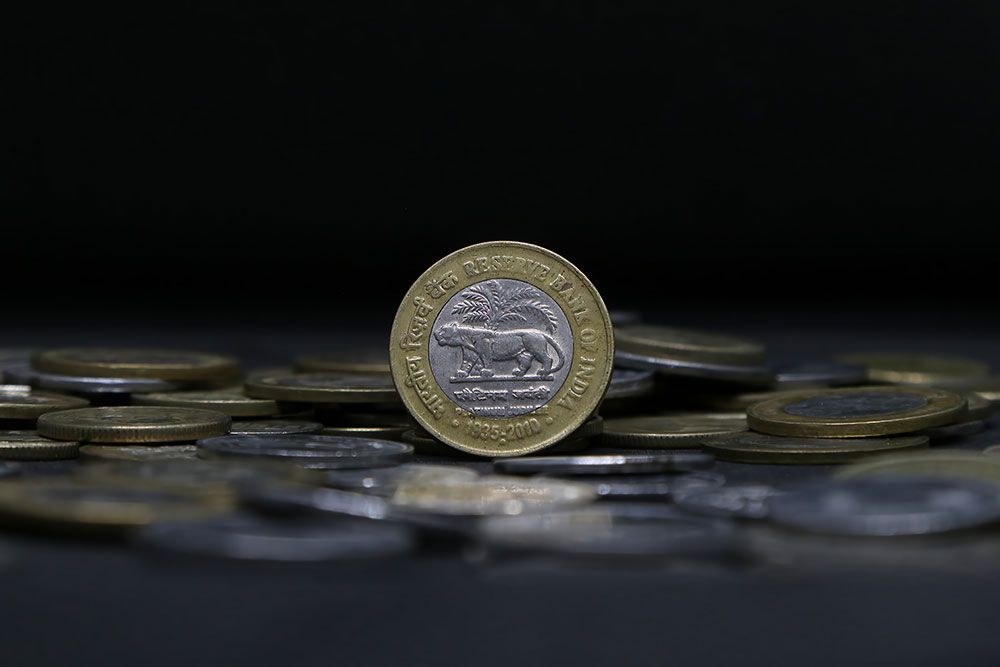
The RBI’s latest measures to defend the rupee were hardly unexpected. With the Indian currency inching towards the psychologically significant 100-per-dollar mark, intervention by the central bank was only a matter of time. From directly meeting the dollar requirements of state-run OMCs to tightening rules governing foreign exchange derivatives, the RBI has stepped up efforts to contain pressure on the currency. While the RBI may be able to slow the rupee’s slide, a durable reversal will require more than emergency measures.
India’s banking regulator the Reserve Bank of India’s (RBI’s) new set of measures to contain the rupee slide does not come as a surprise to many as it was only about time when the Central bank intervened after the INR’s level nearly touched the 97 mark.
While the central bank maintains its stance that it has not decided a level for the rupee against the US dollar and the current panic is blown out of proportion, the communication to the public is more frequent now to assuage fears. If one reads between the lines, the tension appears palpable.
In a slew of measures announced by the RBI last week based on its assessment of the current market conditions, the Reserve Bank decided to open a special window to meet the entire daily dollar requirements of three public sector oil marketing companies (OMCs), viz. Indian Oil Corporation Limited (IOC), Hindustan Petroleum Corporation Limited (HPCL) and Bharat Petroleum Corporation Limited (BPCL). Under the facility, the RBI will undertake sale of USD to the public sector OMCs through designated bank/s.
The daily dollar requirement of the OMCs is estimated between USD 500 million to USD 600 million.
The facility has come into effect from October 12 and will remain in place until further notice. The measure comes after the central bank’s earlier initiative to attract foreign currency inflows through foreign currency non-resident (FCNR(B)) deposits and a dollar-rupee swap facility. The latest steps signal the RBI’s continued efforts to manage dollar demand and curb speculative activity amid persistent pressure on the Indian currency.
Oil marketing companies are significant buyers of dollars because India imports a large share (around 80 per cent) of its crude oil requirements. Their demand for dollars can exert pressure on the rupee, particularly when global crude prices are elevated or foreign currency inflows are insufficient to meet demand. By directly meeting their dollar requirements, the RBI aims to manage this source of demand in the foreign exchange market.
The RBI is also taking a set of measures to curb pressure on the rupee and maintain orderly conditions in the foreign exchange market by tightening rules governing foreign exchange derivative transactions.
Under the revised rules, authorised dealers will not be allowed to rebook foreign exchange derivative contracts involving the rupee that were cancelled after the issuance of the directions. However, rollover of contracts upon maturity will continue to be permitted, subject to existing regulatory requirements.
The RBI has also sharply reduced the threshold for undertaking foreign exchange derivative transactions without establishing the underlying exposure. The limit for hedging contracted exposures without establishing the existence of the underlying exposure has been cut from USD 100 million to USD 5 million across authorised dealers. A similar reduction applies to positions in exchange-traded rupee currency derivatives across recognised stock exchanges.
In addition, users entering into rupee-linked foreign exchange derivative contracts to hedge contracted exposures will have to provide an undertaking confirming that the same underlying exposure has not been hedged with another authorised dealer. The requirement is intended to prevent duplicate hedging of the same exposure.
Another significant measure is the introduction of a Foreign Exchange Risk Reserve (FERR). For rupee-linked foreign exchange derivative contracts with a notional value exceeding USD 2 million, authorised dealers will be required to maintain a cash reserve with the RBI equivalent to 20 per cent of the rupee value of each transaction. The requirement will apply to contracts used to hedge current account exposures where the user purchases foreign currency against the rupee.
Taken together, the measures reflect the RBI’s effort to address pressure on the currency through both the demand side of the foreign exchange market and tighter controls on derivatives activity. While the special dollar window directly addresses the foreign currency requirements of state-run oil companies, the revised derivative rules are intended to discourage excessive positions and strengthen safeguards against multiple hedges.
The impact
The measures collectively showed significant impact as the INR recovered to near 95 as we publish this article.
Earlier, the RBI’s USD-INR forex swap facility covering the Foreign Currency Non-Resident (Bank) deposits garnered a whopping USD 127.23 billion in deposits against the expectation of a USD 90-100 billion of inflows. With USD 5.26 billion and USD 3.89 billion in Overseas Foreign Currency Borrowings (OFCBs) and External Commercial Borrowings (ECBs), respectively, the total deposits that hit the shores were worth USD 137 billion.
The overwhelming response forced the RBI to prematurely shut the window though it allowed the banks to execute the swap for eligible FCNR deposits until September 11. Eligible FCNR(B) deposit are those deposited on or before August 31.
It was a big sentiment booster for the local economy, with rupee appreciating from a near 97 all-time low to just about 94. The INR recovered by 2.6 per cent in less than three months.
But my argument remains on the longevity of such measures as the slide resumes once the impact subsides.
India relies heavily on imports for its energy needs; it is a big consumer of gold, buys edible oil, chemicals and electronics in large quantities for its consumption needs.
We are an agri and service-dominated economy with contribution from manufacturing at an abysmally low teen. Unless, we work more aggressively to reverse these dynamics, no measure will be good enough to sustain for long.
While there will be economic cycles where we would do great on the GDP front, how we move to secure our energy needs and start manufacturing at scale to first meet our own requirements will remain the key.
The RBI has also hinted at using the interest rate hikes to control the rupee depreciation as inflation rises and inches towards the red line of 6 per cent.
Months ahead will be worth watching.