
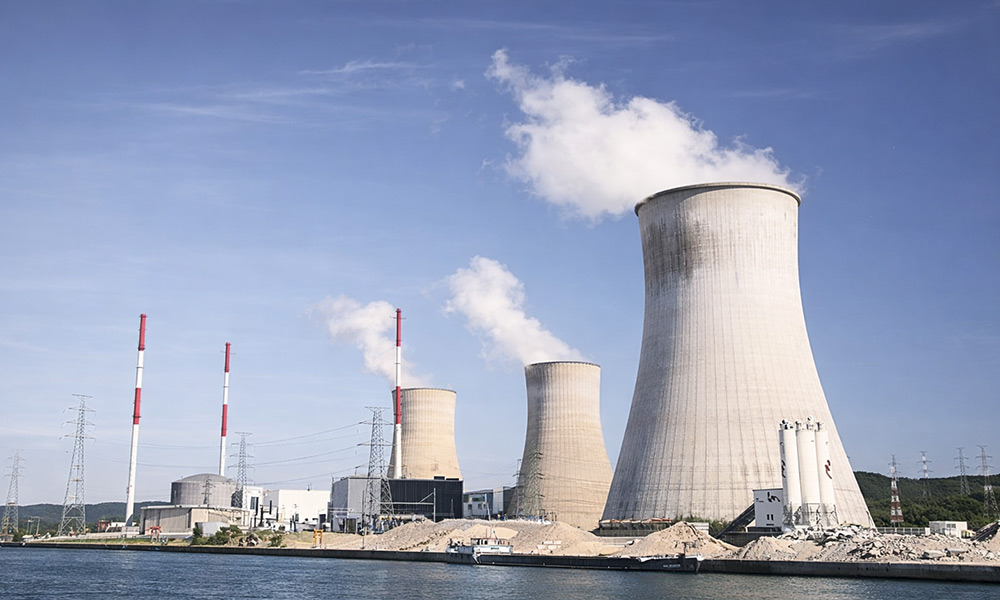
For most of independent India’s history, nuclear power has occupied a singular place in the country’s development story. Neither fully commercial nor merely technological, nuclear energy was treated as a sovereign capability—bound tightly to national security, scientific self-reliance, and strategic autonomy. Power generation was only one of its objectives. Control mattered as much as capacity. That settlement is now being fundamentally re-examined.
In recent Parliamentary sessions, the Government of India has formally indicated its intention to open civil nuclear power generation to private sector participation, a shift anchored in a reform framework referred to as Project SHANTI (Sustainable Harnessing and Advancement of Nuclear Energy for Transforming India). If implemented, this would mark the most significant structural change in India’s nuclear power programme since the Atomic Energy Act was enacted in 1962.
Nuclear Power in India: A Sector Apart
India’s nuclear energy programme has always followed a path distinct from other power sectors. Coal was liberalised. Renewables were incentivised. Transmission and distribution were partially unbundled. Nuclear, by contrast, remained closed—both legally and institutionally.
The reasons were rooted in history. Nuclear science in India developed under geopolitical constraints, technology denial regimes, and strategic secrecy. Civil and strategic nuclear capabilities grew together, reinforcing the logic of state monopoly. The Atomic Energy Act of 1962 vested all authority over nuclear energy in the central government, and institutions under the Department of Atomic Energy became the sole custodians of nuclear research, fuel, and power generation.
For decades, this model appeared sufficient. Nuclear power stations were built slowly but steadily, and their contribution—though small—was reliable. However, by the early 2010s, cracks began to appear, not in safety or competence, but in scale, speed, and capital availability.
A Look Back: India’s Nuclear Power Journey Since 2010
The Post–Civil Nuclear Agreement Phase
The late 2000s marked a turning point with India’s civil nuclear engagement with the international community. Expectations were high that foreign technology, fuel access, and investment would dramatically expand India’s nuclear capacity. Yet, the following decade told a more complicated story.
Between 2010 and 2015, nuclear capacity grew incrementally, largely through indigenously designed pressurised heavy water reactors (PHWRs). While this reinforced India’s technological self-reliance, expansion remained slow. Projects faced delays due to land acquisition challenges, local opposition, supply-chain bottlenecks, and financing constraints.
Crucially, the Civil Liability for Nuclear Damage Act, 2010 introduced a liability regime that placed significant responsibility on plant operators and allowed recourse against suppliers. While rooted in public interest, this framework created uncertainty for global vendors and insurers. As a result, large-scale foreign reactor projects remained stalled for years.
Consolidation and Indigenous Focus (2015–2020)
The period between 2015 and 2020 saw a strategic recalibration. Instead of relying on imported reactors, India doubled down on its indigenous PHWR (Pressurized Heavy Water Reactor) programme. The government approved a fleet-mode construction strategy to build multiple reactors of standardised design, aiming to reduce costs and execution timelines.
This phase brought stability but not acceleration. Nuclear power continued to account for less than 3 percent of India’s electricity generation. Meanwhile, renewable energy surged ahead, driven by falling solar costs and aggressive policy support.
Yet, beneath the surface, concerns were growing. Grid operators began grappling with intermittency. Industrial consumers worried about long-term power reliability. Climate commitments intensified pressure to find non-fossil baseload solutions.
The Energy Transition Reality Check
By the early 2020s, India’s energy debate had matured. Renewables were no longer framed as a silver bullet but as one pillar of a complex system. Storage technologies were improving but remained expensive at scale. Natural gas faced import dependence. Coal was politically and environmentally constrained.
This context revived interest in nuclear energy—not as a dominant source, but as a strategic stabiliser in a decarbonising grid.
Policy discussions began shifting from “whether nuclear” to “how nuclear”. The central question was no longer safety or feasibility, but delivery capacity.
Why the Old Model was Reaching its Limits
India’s nuclear sector is overseen by highly competent institutions, but their structure was designed for a different era—one where incremental expansion was acceptable and capital constraints were secondary.
Large nuclear projects require:
- Long-term patient capital,
- Complex project management,
- High-precision manufacturing at scale,
- Robust risk-sharing frameworks,
- And sustained regulatory oversight.
As ambitions expanded toward 2047, it became evident that relying exclusively on public finances and state-owned execution would slow progress. Meanwhile, India’s private sector had evolved dramatically, with firms capable of executing large infrastructure projects across power, hydrocarbons, steel, and transportation.
The exclusion of private capital from nuclear energy increasingly looked like a structural inefficiency rather than a strategic necessity.
Enter Project SHANTI: A Controlled Opening
Project SHANTI represents the government’s attempt to reconcile nuclear exceptionalism with economic pragmatism.
Rather than dismantling state control, SHANTI proposes a layered liberalisation—opening selected parts of the value chain while retaining sovereign authority over safety, fuel, and regulation.
At the heart of this shift is the proposal to amend the Atomic Energy Act, 1962, enabling private sector participation in civil nuclear power generation for the first time. This intent has been formally acknowledged in recent discussions in the Parliament of India.
What Private Participation Is Likely to Look Like
Minority Ownership, Not Privatisation
Private entities are expected to participate primarily as minority equity partners in nuclear power projects. Public-sector operators—particularly Nuclear Power Corporation of India Limited—are likely to retain majority ownership and operational control.
This structure preserves accountability while allowing private capital to reduce the fiscal burden on the state.
Captive Nuclear Power for Industry
Another proposed model involves nuclear power plants dedicated to supplying electricity to specific industrial users. Energy-intensive sectors such as steel, aluminium, and green hydrogen require steady, long-duration power—something nuclear energy is uniquely positioned to provide.
In this model, private industrial players could co-invest in nuclear facilities under state oversight, securing long-term power contracts while supporting decarbonisation.
Supply-Chain and Manufacturing Expansion
Perhaps the most immediate impact of SHANTI will be in manufacturing and construction. Nuclear-grade components—reactor vessels, pumps, control systems—require specialised capabilities. Opening the sector could catalyse a domestic ecosystem of certified suppliers, reduction in costs and improving timelines.
Small Modular Reactors: The Bridge Technology
A cornerstone of India’s new nuclear thinking is the emphasis on Small Modular Reactors (SMRs).
SMRs differ fundamentally from traditional large reactors. They are designed for factory fabrication, modular deployment, and incremental capacity addition. Their smaller footprint makes them suitable for industrial clusters and remote locations.
Under Project SHANTI, India has articulated a Nuclear Energy Mission aimed at developing indigenous SMR designs over the next decade. For private investors, SMRs offer lower upfront risk. For policymakers, they represent a pragmatic path to scaling nuclear capacity without overwhelming regulatory and financial systems.
Importantly, SMRs also open the door for India to emerge as a technology exporter, rather than merely a consumer of nuclear systems.
The Liability Challenge: Reforming Without Diluting Responsibility
No discussion of private participation in nuclear power can avoid the question of liability.
India’s existing liability framework was designed to prioritise victim compensation and accountability. However, it has also been cited as a deterrent to investment due to uncertainty and insurance limitations.
Reform does not mean abandoning public interest. It means creating a predictable risk-sharing architecture that ensures:
- Immediate and adequate compensation in case of an accident,
- Clear attribution of responsibility,
- Financial mechanisms—such as pooled insurance or state backstops—for catastrophic risks.
What Will Not Change
Despite the opening, several aspects of India’s nuclear programme are expected to remain firmly under state control:
- Uranium mining and fuel processing,
- International nuclear diplomacy and safeguards,
- Regulatory oversight and safety enforcement,
- Strategic materials and waste management.
In essence, the reform separates commercial participation from strategic authority.
Risks and Governance Challenges
Opening nuclear power to private players is not without risks.
- Fragmented accountability could weaken safety if roles are poorly defined.
- Regulatory overload could strain institutions if capacity does not scale.
- Public trust could erode without transparent communication and engagement.
- Contractual disputes could delay projects rather than accelerate them.
Nuclear energy demands institutional discipline. Efficiency gains must not come at the cost of oversight.
Why This Moment Matters
India’s nuclear reform is not about ideology. It is about realism.
The country faces a future of rising energy demand, climate pressure, and geopolitical uncertainty. Nuclear power—long marginalised—offers reliability and strategic autonomy. But unlocking its potential requires new financing models and execution capacity.
Project SHANTI reflects a recognition that state monopoly is not synonymous with sovereignty, and that carefully governed private participation can strengthen—not weaken—national capability.
Conclusion: A Defining Test of Institutional Maturity
Opening India’s nuclear power sector to the private sector is one of the most ambitious governance experiments of this decade. It tests India’s ability to modernise sensitive institutions without compromising safety, transparency, or public trust.
If executed with caution, clarity, and competence, Project SHANTI could transform nuclear energy from a slow-moving legacy sector into a dynamic pillar of India’s clean-energy future. If mishandled, it risks becoming a symbol of overreach in a domain that tolerates no error.